Adventure Pace Running

Explore the world. Discover yourself.

  • I’m somewhat embarrassed to say that this only really dawned on me today.

    When I’m out for a run, it’s the only time in my day when my mind isn’t in overdrive—or at the very least, it’s the only time I can override its usual hyperactivity.

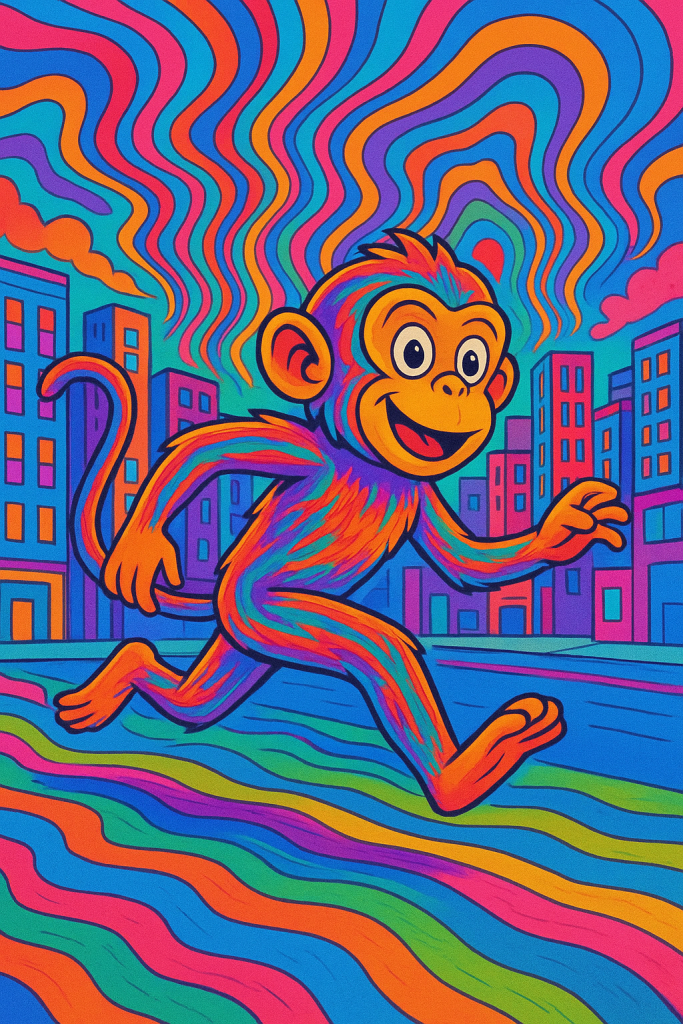
    Throughout the day, and unfortunately at night in bed, my mind is like a thousand monkeys racing through a house of bananas. It’s perhaps the most perfect animated depiction of hyperactivity I can imagine.

    Despite what I’ve written in past posts about the “knowledge run” or processing thoughts while running—both of which are true—there’s something deeper here. Being in a state of forward movement under some sort of endurance load is, for whatever reason, a prerequisite for my mental equanimity.

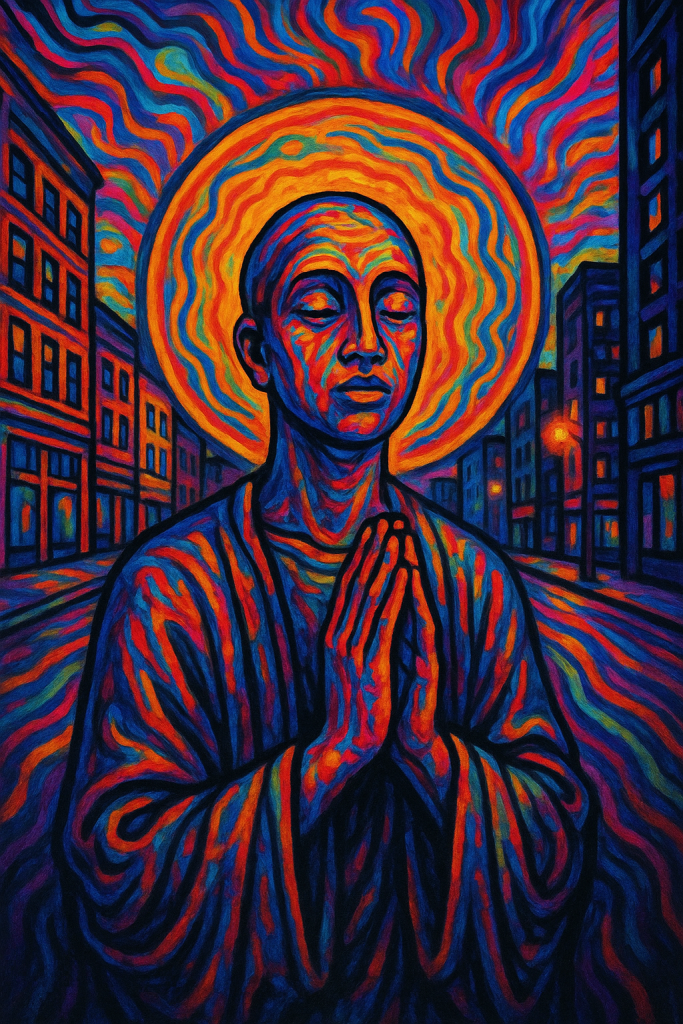
    I’ve been meditating formally for over a decade. Even with a daily practice totaling thousands of hours on the cushion, meditation still feels like a constant tug-of-war.

    That may sound counterintuitive, but it’s an ongoing, effortless effort to continuously bring the mind back to what we call “the present.”

    Out on a run, though, that same attentive presence is instantly available. It’s easily attained, sustained, and upheld—with a higher quality of focus than anything I’ve ever experienced on the cushion.

    I’m sure there’s a lot of underlying neurophysiology at play here, but the ability to just dial in is unbelievable, and the contrast to my sitting practice is stark.


  • Perhaps more fitting than “Adventure Pace.”

    Lately, I’ve been shifting the framework around my intention for running:

    Less about the novelty, more about the internal landscape

    The more I’ve come to learn about the behaviors of folks with ADHD and how it affects “knowledge work”, the more I’ve come to rely on what I’m calling the one-mile thinking loop.

    Whenever I’m faced with a complex problem, or I’ve just come out of a meeting filled with deliverables, action items, or heavy cognitive load, I go for a one-mile loop.

    And somehow, almost subconsciously, all the information I’ve taken in starts to organize itself. It’s as if my brain turns into a filtration system — breaking things down into manageable tasks and surfacing what I need to do next. And this happens within 10 minutes.

    It’s highly effective.

    Like all good things, they evolve. And my relationship with running continues to do just that. These one-mile “knowledge loops” are becoming a regular part of my process. They’ve already had a huge impact on the productivity and quality of my work — and on my creativity overall.

  • My original intention with running was almost exclusively about novelty-seeking — using it as a vehicle to explore new areas.

    Chase the dopamine hits that come from combining endurance with fresh environments.

    Lately, though, I’ve been starting my day by running the same loop every morning — just a single mile. It’s the same loop I use when I need a break from my screen and only have ten minutes.

    At first, the monotony of this loop felt limiting. But over time, it’s revealed something deeper:

    The unsustainable nature of relying on novelty-seeking alone when it comes to running — and maybe to life more broadly. That could be a whole topic in itself.

    What I’ve discovered in these single-mile loops is a shift. The novelty-seeking hasn’t disappeared — it’s just turned inward.

    When the external environment becomes predictable, the inner landscape begins to open up. The experience of running becomes less about where I am and more about the changing textures of mind and body — the phenomenology of movement itself.

    As I’ve learned to appreciate running for its own sake — for its meditative qualities — I’ve become more attuned to the quiet transformations that happen internally. The loop stays the same, but I don’t.

    So this post is for Mikey Lightning, and the vibe we shared last night about the Morning Mile — how it shifts the trajectory of your entire day.

    Maybe this is an homage. A celebration of the mundane. And the deep joy that can be found in the raw phenomenology of running.

  • Great band name, to be sure . . . .

    In my previous post about sustained attention, I shared how I’ve been deeply interested in the meditative nature of running—especially tuning into a form that feels sustainable, enjoyable, and freeing.

    Not task-oriented, but truly meditative.

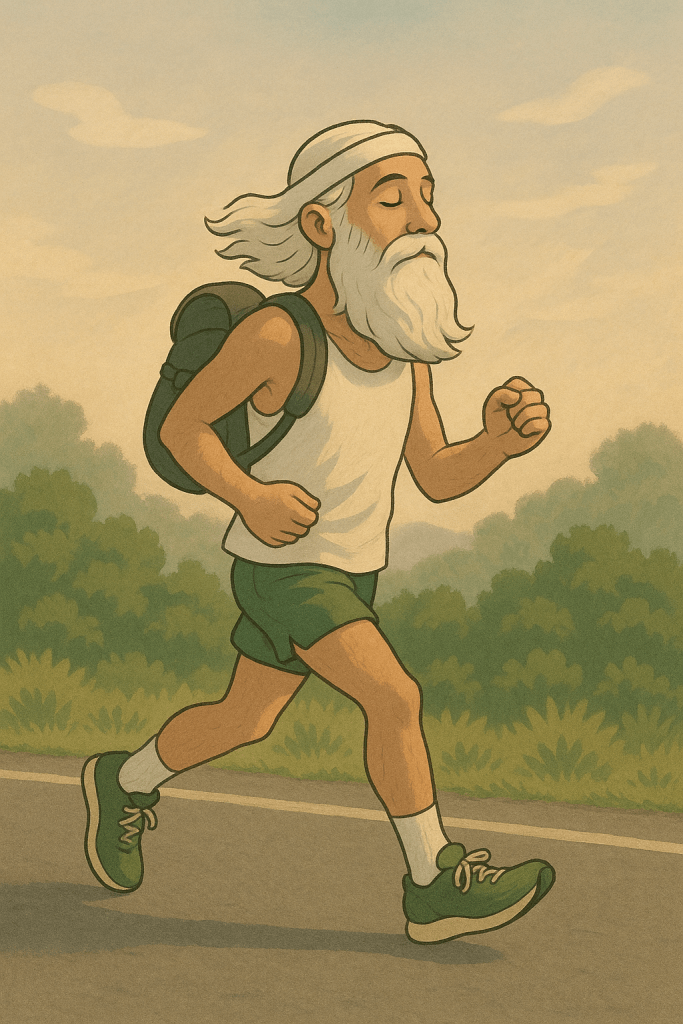
    This morning, during my daily sunrise mile, I focused intently on my hamstrings, glutes, and especially the swaying motion of my hips, arms, and hands.

    I became aware of how all these parts moved together in a beautiful biomechanical symphony.

    The image that came to mind was that of an old steam locomotive—those long side rods driving the wheels, everything gliding effortlessly along the rails.

    I imagined my fists slightly clenched, synchronizing with the motion of my hips—almost acting as an astute symphony conductor.

    Meanwhile, all the true force was originating from my hamstrings and glutes. Respiration became the fuel—like steam billowing from the top of the engine.

    As I leaned into that image and embodied it, it made a noticeable difference. It helped me fully dial in my form. This is the image I’ll carry with me moving forward: this steampunk locomotive as a metaphor for powerful, fluid, meditative running.

  • One of the things I’ve been doing lately is using running as a way to build human connection.

    Sometimes that means going on a run with a friend, and other times it means using that time-on-feet to make a phone call and reconnect with someone I care about.

    There’s something synergistic about being in an endurance state while having a conversation.

    It forces you to slow down.

    It opens you up mentally and emotionally.

    Words don’t come as easily, thus more intention behind their formation.

    Over the past couple of weeks, I’ve made it a habit. On some runs, I’ll call my Mom, who I’ve been reconnecting with after decades. Yesterday, I did the same with a lifelong friend. We hadn’t spoken in a while—not for any specific reason, just because that’s life. But we had a great a great conversation.

    Earlier that morning, running was the excuse to have coffee with a friend and get out for a few miles through some beautiful neighborhoods in the early morning sun.

    It’s become a beautiful excuse to make the most of that time—productive, rewarding, and I’d even say energetic in the deepest sense.

    So this post is for my mom, my dear friend Lacey, and to Brian, and for all the people down the line who’ll get a slightly out-of-breath phone call from me while I’m out putting in the miles.

    Much love to all.

  • I’ve made a lot of headway in my relationship with running. Where before, the weekly mileage felt somewhat compulsive, I’m now realizing that somewhere along the way, I lost the reverence and intention behind what I was doing.

    I’m not entirely sure what shifted. Maybe it was stepping away from social media, maybe it was focusing more on the adventure—on simply conditioning the body to do what I call “Project Miles.” That means training to handle long days at a slow, sustainable pace, purely for the sake of exploration.

    With that mindset—treating running more like an art than an athletic pursuit—I’ve been logging even bigger mileage weeks. At the same time, I’m more at peace with taking taper weeks, focusing on strength, and letting the project unfold naturally. That’s a totally different headspace.

    I’ve been re-exploring fasted running, and I’ve been able to manage it mentally much better than I expected. My North Star in all of this is the idea of “Project Miles”—it’s the guiding principle behind my training. And it’s deeply rewarding.

    I just wrapped up a 60+ mile week, made a cool video, and explored new cities. As I watch my hat and shirt dripping with sweat—it’s been in the 90s the past few days—I feel genuinely excited.

    It’s that feeling of excitement that keeps me going.

  • For the longest time, I’ve been searching for the parallel between running and meditation.

    It wasn’t until I developed shin splints—an injury I initially chalked up to overuse—that I discovered what’s deeply embedded in the act of sustained attention: sustaining and maintaining proper form, and in that, it becomes meditative.

    The level of attention required to continually calibrate the system—to monitor every foot placement, hip movement, hand position, stride, pace, and breath—is immense.

    A constant process of listening to areas of discomfort, recalibrating, retraining, and reiterating. That state of sustained attention is northing more than meditative.

    It’s an invitation always to return; a condition always on offer. The challenge is, the knowing required to navigate back to that state. The beauty of the discalibration is such that it provides an invitation to reclaim attention.

  • The other day, while coordinating a run with a friend, the phrase “I’m gonna do it now to get it over with” came up—and it really struck me.

    What are we doing if the reason we’re going out is just to get it over with?

    I see a similar mindset in people who run fast. And to be clear, there’s nothing inherently wrong with running fast—but it becomes problematic if your pace is dictated by a desire to be done with the moment.

    I’ve fully embraced the spirit of slowing down—running slow not just for the cardiometabolic benefits, but also for something deeper.

    Yes, there’s the physiological benefit—but there’s also a spiritual one: the act of being present. That may sound contradictory to some of my earlier reflections about the destination being the pull. But I think both can coexist. You can appreciate the allure of the destination while also maintaining reverence for every transcendent moment that carries you there.

    So if I’m out for a run and I catch myself just trying to get it over with, then I know—somewhere along the way—I’ve become miscalibrated.

    The spirit has been consumed by the left hemisphere of my brain. To run truly in spirit, it must reside in the right hemisphere.

  • Behold the novelty portal.

    In the world of artists, they call it stark relief:
    novelty made vivid against the backdrop of monotony.

    Seize the moment when it appears.
    Make the stop.
    Enter the portal.

    After a long day of driving the monotonous highways of the North Country,
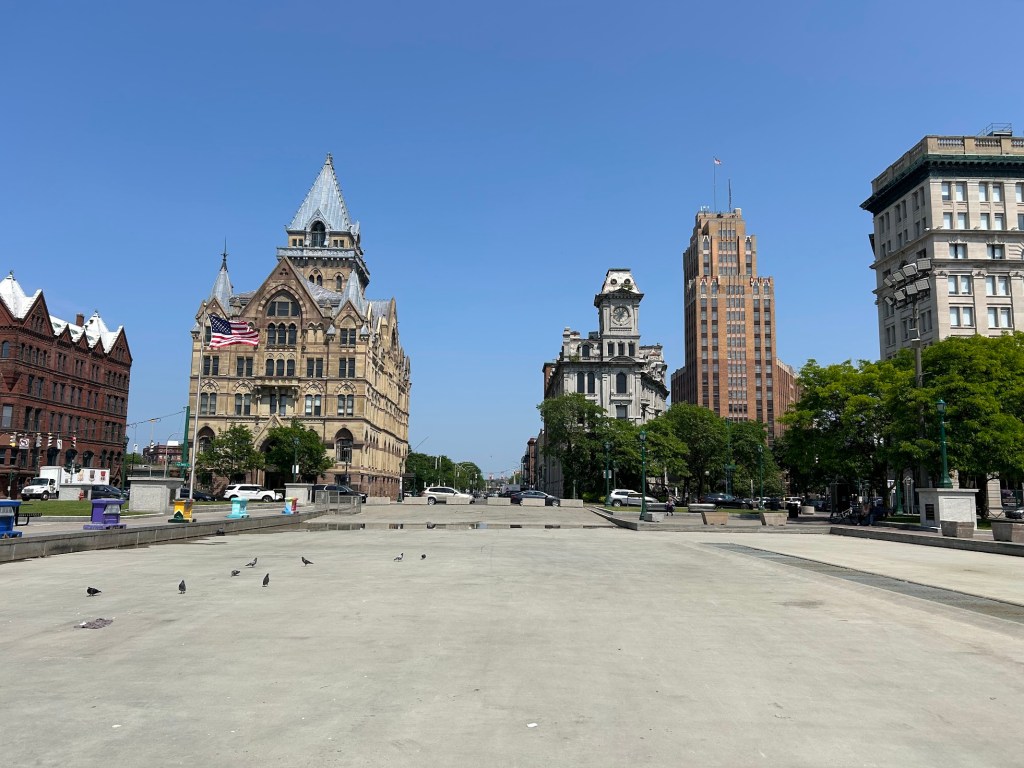
    I wrestled with the idea of stopping for a short run through downtown Syracuse.
    It’s been on my list for a while.
    I waffled.
    And soon regretted it—stuck in construction traffic,
    second-guessing the risk of leaving expensive work equipment in the car.

    But I found parking.
    I stepped out.
    Acquired GPS signal on my watch.
    And within minutes,
    I entered the novelty portal.

    The historic architecture.
    The places I had only seen in passing—finally real, finally near.
    I stopped and took photos of a mural I’ve long admired from afar,
    each time I flew past it on I-90.

    It was just over two miles.
    But the experience?
    It lives on—
    especially in stark relief
    to the monotony of an enclosed vehicle
    on a forgettable highway.

  • Recently, I stopped uploading all my experiences to Strava.
    It may seem trivial—an irrelevant shift.
    But what it revealed was something deeper:
    reputational display.

    When you go out and experience something,
    the act of sharing it can subtly corrupt it.
    It feeds back into your next endeavor,
    your next route,
    your next feat.

    I was surprised by the magnitude of change
    once I removed the public-facing representation of what I was doing.

    What was left, after the sediment drifted to the bottom,
    was true engagement.

    What would I do—simply for myself?

    To me, running has nothing to do with pace.
    It has nothing to do with organized races.
    It’s not about performance, per se —
    it’s about creativity.

    Running represents exploration.
    Running is creative.

    I want to build mosaics—
    of mind, of movement, of experience.

    Ask yourself:
    “What would I keep doing if the whole world thought it was stupid?”

    For me, it’s this.
    Running.
    Exploring cities.
    Being an opportunist.
    Creating utilitarian challenges.
    Perfecting my form to overcome my own physiological and biomechanical limits.

    It’s about my heatmap.
    Which no one else can see.
    Those are my souvenirs.

    And somewhere along the way,
    when I became too consumed by the athlete persona,
    I lost that.

    I’m not an athlete.

    I’m an artist.